

History is always complex and layered in the Middle East, and there is always a danger in over simplifying. So I want to be clear here that I am not intending to say the history of Christendom in the Middle East has not left a bloody trail. It certainly has — from the barbarism of the Crusades to the Lebanese Civil War of the 1970s and 1980s when Christian factions were as murderous as any of their Muslim or Druse counterparts and to President George Bush’s war in Iraq which plenty of Iraqis viewed — rightly or wrongly — as an exertion of ‘American Christian’ power.
But woven into that history is a lively intellectual ferment that supports democracy and secular nationalism and has been largely shaped by Arab thinkers and leaders who were Christian. Many of the non-violent movements among Palestinians protesting Israeli occupation have come out of the Palestinian Christian town of Bethlehem and the nearby Christian village of Beit Sahour. In Syria and Lebanon, the late 19th and early 20th century Arab Awakening that put forward the idea of secular democracy as the way to challenge colonial hegemony was led largely by Christian intellectuals such as Butrus Al-Bustani and Michel Aflaq.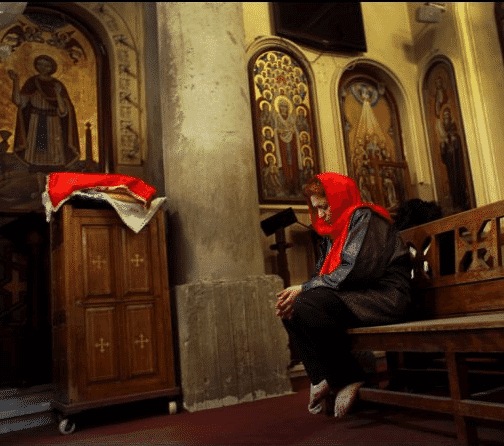
This was crystallized in George Antonius’s 1938 work, “The Arab Awakening,” which Ajami and other say has largely been as the manifesto of the Arab national movement.
This is a long and complex history and one that is not often considered in the contemporary analysis of all that is happening on the ground in the Middle East in the aftermath of the Arab Spring which toppled dictators in Tunisia, Libya and Egypt and ignited a raging civil war in Syria and which remains a smoldering, uncertain chapter of the Middle East’s modern history. But amid all the smoke two years since the historic events of the Arab Spring and ten years since the start of the war in Iraq, the fact is that Christians are fleeing in unprecedented numbers from Egypt, Syria and Iraq.
And so the dramatic Christian disappearance from the land of the Middle East is a small story worth telling in this larger context of tumult and change brought on by the post-9/11 era and the Arab Spring, and one that could have great import.
We will continue bringing forward these stories from Syria, Lebanon, Israel/Palestine and Iraq in an effort to document what could be remembered as an historic exodus of Christians. Our series began on Good Friday, at least according to the Gregorian calendar which is followed by the Roman Catholic Church and most Western denominations.
The majority of Christians in the Middle East follow the Eastern Orthodox calendar and so we will continue this series of posts through Easter as it occurs on the Eastern Orthodox calendar — which this year falls on the first Sunday in May — and close on the following Monday, which marks the story of the Road to Emmaus.
That biblical passage is one that many Christian communities in the Middle East are reflecting on as they literally see their own living Christian presence disappear before their eyes. It is worth noting that the two disciples who fled Jerusalem on that day more than 2,000 years ago were joined by virtually all of the disciples. It was only the disciple James, biblical historians say, who did not emigrate in some fashion out of the Holy Land. And so the steady emigration that is leaving the Middle East with a dwindling Christian presence has in some ways been part of the continuum of the history of the church.
http://www.globalpost.com/dispatches/globalpost-blogs/belief/christian-exodus-middle-east-arab-awakening


